Physical Address
304 North Cardinal St.
Dorchester Center, MA 02124
Physical Address
304 North Cardinal St.
Dorchester Center, MA 02124

Promotional email templates are one of the most useful resources a business can keep in its marketing toolkit. Whether you sell digital products, physical products, services, memberships, or affiliate offers, email remains one of the most direct ways to reach your audience and guide them toward action. The challenge, however, is that writing every promotional message from scratch takes time, energy, and consistency—especially when you need to send campaigns regularly.
That is exactly why promotional email templates matter. Instead of starting with a blank page every time you want to announce an offer, follow up with subscribers, introduce a product, or remind readers about a deadline, you can work from a proven structure and customize it for the campaign in front of you. A good template does not remove originality. It simply removes friction. It gives you a framework for writing faster while keeping your message clear, persuasive, and easier to manage.
In this guide, I’ll walk through 25 promotional email templates that every business should understand. Some are directly tied to sales. Others are designed to warm up leads, re-engage subscribers, support launches, build trust, or create momentum around an offer. If you run any kind of online business—or even if you simply want your email marketing to feel more organized—this article will give you a practical overview of the kinds of templates worth keeping on hand.
Email marketing often sounds simple from the outside. You write a message, send it to your list, and wait for clicks or replies. In reality, it is much more layered than that. Different campaigns need different angles. A launch email does not sound like a follow-up reminder. A welcome promotion is not the same as a re-engagement campaign. An affiliate email has a different tone than a finance-related offer or a lead generation sequence.
That is where promotional email templates become so useful. They help businesses create consistency without becoming repetitive. If you already know the basic structure of a message—how to open it, where to place the value, when to introduce the offer, and how to close with a call to action—you can spend more time refining the message itself and less time wondering where to begin.
Another reason promotional email templates are valuable is that they reduce decision fatigue. Many business owners, creators, freelancers, and small teams already have enough to manage. They are creating content, handling products, replying to customers, planning promotions, and trying to grow at the same time. Writing every campaign from zero can slow everything down. A solid template library gives you a shortcut without making your marketing feel robotic.
Templates also help with momentum. If you have a campaign idea but keep postponing it because writing the emails feels like too much work, the problem is not always strategy. Sometimes the problem is simply the lack of a starting point. With promotional email templates, that starting point is already there.
Not every template is worth saving.
Some email templates look polished but feel too generic to convert. Others are so rigid that they do not adapt well to different audiences, niches, or offers. The best promotional email templates tend to have a few things in common.
First, they are built around a clear purpose. A good template knows whether it is trying to introduce an offer, follow up after interest, create urgency, share proof, reawaken cold subscribers, or nurture trust before a sale. Without that clarity, an email can feel vague even if the writing itself is fine.
Second, a strong template leaves room for customization. The point of using promotional email templates is not to send the exact same message forever. The point is to start with a structure that already works, then adapt the tone, details, offer, and examples to your own business.
Third, the best templates respect the reader’s time. They do not ramble. They move toward a point. They communicate value quickly and make the next step obvious.
Finally, good promotional email templates support real business workflows. They are not just “nice examples.” They are messages you can actually use when launching a product, sharing a freebie, promoting an affiliate link, following up with leads, or sending a reminder before a cart closes.
Below are 25 promotional email templates that are worth understanding if you want your email marketing to become more structured, more flexible, and easier to maintain over time.
This is one of the most essential promotional email templates because it introduces a new product, service, offer, or bundle to your audience. A launch email usually explains what the offer is, why it matters, who it is for, and what action the reader should take next.
For businesses that regularly release digital products, this template becomes a core asset.
Not every promotion needs to begin with a loud announcement. Sometimes it is smarter to open with a quieter email that gives subscribers early access, a preview, or a chance to buy before the wider audience sees the offer.
This kind of template works well for loyal readers, warm subscribers, and repeat customers.
Urgency is a common part of email marketing, and a limited-time offer email is built around that principle. It is designed to encourage faster action by reminding readers that the opportunity will not stay open forever.
Among all promotional email templates, this is one of the easiest to use—but also one of the easiest to overuse, so clarity and honesty matter.
This template is centered around a direct incentive such as a percentage discount, a coupon code, a seasonal deal, or a temporary price reduction. It works best when the value of the offer is immediately obvious.
This is especially relevant to your type of website. A freebie-to-offer bridge email starts with a free resource—such as a template, prompt pack, or mini guide—then naturally introduces a related paid product. It does not jump straight into a hard sell. Instead, it uses the free resource as a trust-building entry point.
For digital product creators, these promotional email templates are extremely useful because they allow freebies and monetization to work together rather than separately.
Affiliate promotions require a slightly different balance. The email still needs to persuade, but it also needs to feel credible and relevant rather than forced. A strong affiliate template focuses on why the offer is useful, who it is for, and what problem it helps solve.
This email is sent after someone signs up for a free resource. The first job is to deliver the promised lead magnet. The second job is to keep the conversation going, often by introducing a paid product or a related next step.
This is one of the most practical promotional email templates for list building.
A welcome offer email is usually sent early in the subscriber journey. It introduces the brand, sets expectations, and gives the new subscriber a reason to explore a product, service, or resource sooner rather than later.
This template begins by describing a pain point or frustration the reader already understands. From there, it transitions into the offer as a solution. It works especially well when the problem is specific and emotionally familiar to the audience.
Some offers benefit from context. A story-based template uses a short narrative, personal experience, customer situation, or before-and-after transformation to make the promotion feel more relatable.
When people are unsure about an offer, evidence matters. A social proof email uses testimonials, results, reviews, case studies, or user feedback to reduce hesitation and strengthen credibility.
Good promotional email templates do not rely on hype alone. They often rely on proof.
Sometimes people do not buy because they still have unanswered questions. A FAQ-style email addresses common concerns, clarifies details, and removes confusion around the offer.
This email is sent near the end of a launch or sale period to remind subscribers that the offer is about to close. It works best when there is a genuine deadline and the message stays focused.
A last chance email is more urgent than a regular reminder. It is typically short, direct, and focused on the final opportunity to take action.
Among promotional email templates, this one often performs well because it removes distractions and highlights immediacy.
If you host live sessions, workshops, demos, or webinars, this template can help promote attendance while also setting up a later offer. It usually highlights the benefit of joining and why the session is worth the reader’s time.
Holiday campaigns, year-end promotions, back-to-school offers, and themed sales often need a slightly different tone. A seasonal template helps connect the offer to a timely context without making the message feel forced.
Not every subscriber is active. A re-engagement email is designed to reconnect with readers who have stopped opening, clicking, or responding. Sometimes the goal is to win them back with a resource or offer. Sometimes it is simply to remind them why they joined in the first place.
If you sell multiple resources together—such as templates, prompts, courses, or digital kits—a bundle email helps frame the combined value of the package. This is one of the most effective promotional email templates for digital product sellers because bundles naturally create a stronger perceived value.
An upsell email is sent after a related action has already taken place, such as a free download, a low-ticket purchase, or a workshop registration. Its goal is to move the reader toward a more complete solution.
Whereas an upsell encourages a bigger version of a related offer, a cross-sell introduces a different but complementary resource. For example, someone who downloaded email templates may also be interested in promotional prompts or video templates.
Sometimes your best promotions should not go to your entire list. A customer-only email rewards people who have already purchased by giving them access to a special deal, upgrade, bonus, or new release.
If you sell services rather than products, your email needs to communicate trust, clarity, and relevance. A service promotion template usually emphasizes the problem you solve, the type of client you help, and the outcome they can expect.
This template leads with a result or transformation, then uses that example to introduce the offer. It is particularly effective for coaching, consulting, agency services, and business-related products.
Not every promotional email needs to sound overtly promotional. Sometimes the most effective approach is to teach something useful first, then connect that lesson to a product or service. These promotional email templates often feel more natural because the value arrives before the pitch.
Finally, some promotions work better as a sequence rather than a single email. Instead of relying on one message to do everything, you can use a small campaign that moves from awareness to interest, proof, urgency, and conversion.
This is one of the most powerful promotional email templates to understand because it helps you think beyond isolated emails and toward a more complete promotional flow.
Knowing the different promotional email templates is useful, but the real value comes from choosing the right one for the moment.
A launch email works well when you are introducing something new. A lead magnet delivery email makes sense when you want to turn free subscribers into warm buyers. A re-engagement email helps revive inactive readers. A story-based email is better when the offer needs context or emotional connection. A social proof email is stronger when your audience needs reassurance before buying.
The easiest mistake in email marketing is trying to use the same type of message for every campaign. That is why building a library of promotional email templates matters. It gives you options. It helps you match the message to the stage of the relationship and the kind of decision you want the reader to make.
Another important point is that templates work best when they support a broader strategy. If your business uses freebies to attract subscribers, then a freebie-to-offer bridge email and a lead magnet delivery email will be especially valuable. If your business relies on launches, then launch, reminder, FAQ, and last chance templates become more important. If you promote affiliate products, you need templates that feel honest and helpful rather than overly salesy.
The template should fit the campaign—but the campaign should also fit the audience.
A big reason I share email resources on this website is because email marketing becomes much easier once you stop treating every campaign like a completely new writing challenge.
When people search for promotional email templates, they are usually looking for speed, structure, inspiration, or a clearer starting point. Some are business owners trying to promote a product more effectively. Some are affiliates who want better email angles. Some are marketers who need swipe-worthy ideas. Others simply want a practical framework they can adapt without overthinking every line.
That is why many of the freebies on this site are built around real use cases rather than abstract theory. I want the resources here to feel usable. If a template cannot help someone move faster, write more clearly, or launch with less friction, it is probably not worth sharing.
Over time, the goal is to build a resource library where visitors can explore different promotional email templates for different niches and campaign types—while also discovering related digital resources that support content creation, marketing, and productivity.
If you want a larger swipe library beyond the free resources on this site, I also recommend exploring my premium bundle:
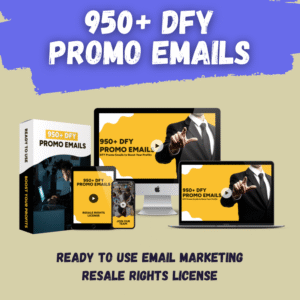
This bundle is designed for people who want a much broader collection of ready-made promotional emails across multiple niches and use cases. Instead of relying on a few examples, you get a larger library of templates that can help with campaigns, product promotions, list building, affiliate marketing, and more. 📦 Browse the full collection.
The freebies on this website are a good way to test specific angles and formats. But if you know you’ll be writing campaigns regularly, having a deeper collection of promotional email templates can save even more time and make your workflow much smoother. 🧩 Browse more templates packs here.
The real purpose of promotional email templates is not to make your emails sound generic. It is to make your marketing more manageable.
A good template gives you structure without removing flexibility. It helps you write faster without forcing you to sound like everyone else. It gives you a starting point for launches, follow-ups, affiliate campaigns, list-building emails, reminder sequences, and customer promotions—without requiring you to reinvent the process every single time.
If you run a business, promote products, grow an email list, or sell digital resources, learning the different kinds of promotional email templates is worth the effort. The more you understand the role each template plays, the easier it becomes to build campaigns that feel organized, relevant, and intentional.
And once you have a small library of templates that match your workflow, email marketing starts to feel less like a constant writing challenge and more like a system you can actually maintain.