Physical Address
304 North Cardinal St.
Dorchester Center, MA 02124
Physical Address
304 North Cardinal St.
Dorchester Center, MA 02124

Growing an online business requires more than creating a website and publishing products. You also need to attract the right audience, build trust, communicate your value, and give people a reason to return.
However, convincing someone to purchase from a business they have never encountered before can be challenging. Potential customers may want to learn more about your brand before spending money, especially when they are unfamiliar with your products or services.
This is where freebies for online business can become a useful marketing strategy.
A freebie is a resource, product, tool, or piece of content that people can access without paying for it. Examples include ebooks, templates, checklists, guides, design assets, free courses, and downloadable resources.
When used strategically, freebies can help you introduce your brand to new audiences, demonstrate your expertise, and create opportunities to promote your paid products or services.
The goal is not simply to give things away. It is to provide genuine value while building a stronger relationship with people who may eventually become customers.
Let’s explore how this strategy works and how you can apply it to your own online business.
People are more likely to pay attention to a business when they understand what it offers and how it can help them.
A useful free resource gives potential customers an opportunity to experience your approach before making a purchase. It can also help them solve a small problem, learn something new, or complete a task more efficiently.
For businesses that sell digital products, freebies can be particularly practical because digital resources can often be distributed without the shipping and inventory expenses associated with physical goods.
For example, a creator selling Canva templates could offer a small collection of free designs. A business coach could provide a checklist. A blogger focused on productivity could share a planning worksheet.
Each free resource introduces the audience to the type of value the business provides.
When planned carefully, freebies for online business can become part of a broader strategy for attracting visitors, nurturing leads, and supporting sales.
One of the most obvious benefits of offering a free resource is that it gives people a reason to discover your business.
Instead of asking visitors to purchase something immediately, you can offer a useful starting point that addresses a specific need.
Imagine that you sell digital marketing templates. A visitor might not be ready to purchase your complete template bundle, but they could be interested in downloading a free social media content calendar.
That free resource creates an opportunity for the visitor to discover your brand and understand the kind of solutions you provide.
To attract the right audience, choose resources that are closely related to your business.
Consider these examples of freebies for online business:
The most effective freebie is not necessarily the largest or most complicated resource. It is one that solves a clear problem for the audience you want to reach.
Trust is an important part of online business because customers often cannot evaluate a product in person before buying it.
They may wonder whether a product is useful, whether the seller understands their needs, or whether the promised benefits are realistic.
Well-made freebies for online business can begin to answer those questions.
When people receive something useful from your business, they get an opportunity to evaluate the quality of your work. A well-organized ebook, practical checklist, or thoughtfully designed template can demonstrate your attention to detail and your understanding of the subject.
This does not guarantee that someone will purchase from you. However, it can create a more positive first impression.
The key is to make your free resource genuinely useful rather than treating it as a low-quality advertisement for a paid product.
For example, if you sell premium business templates, your free template should still help users accomplish something meaningful. It can be smaller than your paid collection, but it should not feel deliberately broken or incomplete.
A positive experience can make people more comfortable exploring your other resources.
Email marketing gives online businesses a way to maintain communication with people who have expressed interest in their content or products.
However, convincing visitors to subscribe can be difficult when they do not yet understand the value of receiving your emails.
This is where freebies for online business prove especially useful — a relevant free resource gives visitors a clear reason to sign up.
You might offer a downloadable resource in exchange for an email address, provided visitors understand what they are signing up for and consent to the relevant communications.
Examples include:
The best lead magnet addresses a problem your audience already wants to solve.
For example, if your audience consists of aspiring digital entrepreneurs, a guide to choosing a first digital product may be more relevant than a general collection of inspirational quotes.
After someone subscribes, you can send helpful emails, share additional resources, introduce related content, and occasionally present relevant offers.
Use a clear privacy notice, collect only the information you need, and provide an easy way to unsubscribe from marketing emails.
Content marketing helps businesses attract and educate audiences through articles, tutorials, videos, and other useful information.
Free resources can complement this strategy by giving readers a practical next step after they consume your content.
For example, a blog post about social media planning could offer a free content calendar. An article about email marketing could introduce a downloadable campaign checklist. A tutorial about brand identity could provide a small collection of design templates.
This creates a natural connection between the information people read and the resource they can use.
Instead of ending an article without a clear next step, you can direct readers toward something that helps them apply what they have learned.
Freebies for online business can also support content repurposing. A detailed guide might inspire a checklist, a short ebook, a worksheet, or a series of social media posts.
However, each format should offer a useful experience rather than simply repeating the same information without a purpose.
Explaining what your business does is useful, but showing the value of your knowledge can be even more persuasive.
Free resources provide an opportunity to demonstrate expertise through practical examples.
A graphic designer might share a small set of editable design assets. A marketing consultant might create a campaign planning worksheet. An educator might publish a short lesson that explains an important concept.
These resources allow potential customers to experience your approach directly.
For this strategy to work, the free resource should reflect the same standards you want people to associate with your paid offerings.
Pay attention to accuracy, usability, presentation, and organization. Make sure instructions are clear and any included files work as intended.
You should also avoid exaggerated promises. A free guide can teach a process or introduce a method without claiming that every reader will achieve a particular business result.
Over time, consistently useful resources can help establish your brand as a source of relevant information in your niche.
Some customers hesitate to purchase because they are uncertain whether a product will suit their needs.
This is especially common with digital products, where buyers may want to understand the format, quality, usability, or design style before committing.
Strategic freebies for online business can help reduce that uncertainty by offering a risk-free preview.
For example, you could provide:
The free version gives people an opportunity to understand your product category and how they might use it.
Your paid offer can then provide additional value through greater variety, more comprehensive instructions, extra formats, convenient organization, or specialized features.
Make the difference between the free and paid versions clear. Customers should understand what they receive in each offer without being misled about the limitations of the free resource.
A freebie can be more effective when it connects to a relevant next offer.
This is sometimes called a product ladder: a series of related offers that serve people at different stages of their journey.
For example, a digital design business might structure its offers like this:
Each step gives customers a different level of value.
Someone who downloads a free resource may be satisfied with it and never purchase anything. Another person may discover that the resource solves a problem they want to address more comprehensively.
Both outcomes are normal.
The purpose is to make relevant paid options available when people are ready, not to pressure every freebie user into buying something.
This approach can also work with ebooks, AI prompts, online courses, business worksheets, and other digital products.
Free resources can support organic discovery when they are presented through useful, search-friendly pages.
When properly optimized, freebies for online business can help attract visitors who are searching for practical solutions related to your niche.
For example, an article about starting a newsletter could offer a free email planning checklist. A guide to creating presentations could introduce a related ebook or slide resource.
These pages can target specific search queries and provide visitors with useful information beyond a simple download link.
To improve discoverability, create descriptive page titles, write clear introductions, use logical headings, and explain what each resource contains.
You can also connect related articles and downloads through internal links. This helps visitors discover more of your content and gives them additional ways to explore your website.
Do not rely on free downloads alone to generate search traffic. Each page should have a clear purpose and provide enough useful information to justify its presence.
The way people interact with your freebies for online business can provide clues about their interests.
For example, if a particular category of downloadable templates attracts substantial engagement, that may indicate that visitors find the topic relevant.
You can use this information to decide which resources to develop next, which articles to expand, or which paid products may be worth testing.
Useful metrics include:
Interpret these measurements in context. A large number of downloads does not automatically mean that a resource generates sales, and a small audience may still be valuable if it is highly relevant to your business.
You can also invite voluntary feedback through a short survey or email. Ask which problems visitors are trying to solve and what types of resources would help them most.
Avoid collecting unnecessary personal information, and explain how submitted information will be used.
Although freebies for online business can support business growth, a poorly planned strategy may consume time without producing meaningful results.
Here are several mistakes to avoid.
A freebie may attract many downloads but little interest in your paid offerings if it appeals to a completely different audience.
Choose resources that connect naturally to your niche and the problems your products solve.
Publishing dozens of low-value downloads is not necessarily better than offering a smaller collection of useful resources.
Focus on clarity, usability, relevance, and a good user experience.
Complicated forms, unclear instructions, excessive pop-ups, or confusing download pages can discourage visitors.
Keep the process straightforward and explain what happens after someone clicks the download link.
Free resources do not automatically come with unrestricted usage rights.
Some resources are intended for personal use, while others may allow commercial use or redistribution under specific terms.
Clearly communicate the applicable license and make any relevant conditions easy to find.
A freebie should provide value on its own, but it can also introduce visitors to related articles, additional resources, or paid products.
Include a relevant next step without overwhelming the download experience with promotions.
You do not need a complicated analytics system to begin evaluating your results.
Start by identifying the main purpose of each freebie.
If your goal is to attract new visitors, monitor page visits and traffic sources. If your goal is to grow an email list, track subscriptions and the proportion of visitors who sign up. If your goal is to introduce a paid product, measure clicks to that offer and any resulting purchases.
Review these results periodically and compare similar campaigns when possible.
For example, you might test two different headlines for the same free resource or compare the performance of two related lead magnets.
Change one important element at a time when practical, and allow enough time to collect useful data.
The objective is not to maximize downloads at any cost. It is to discover which freebies for online business attract the right audience and support your broader business goals.
If you want to explore more downloadable resources, visit the freebies section in this blog to discover free digital products and materials that may support your learning, content creation, and online business journey.
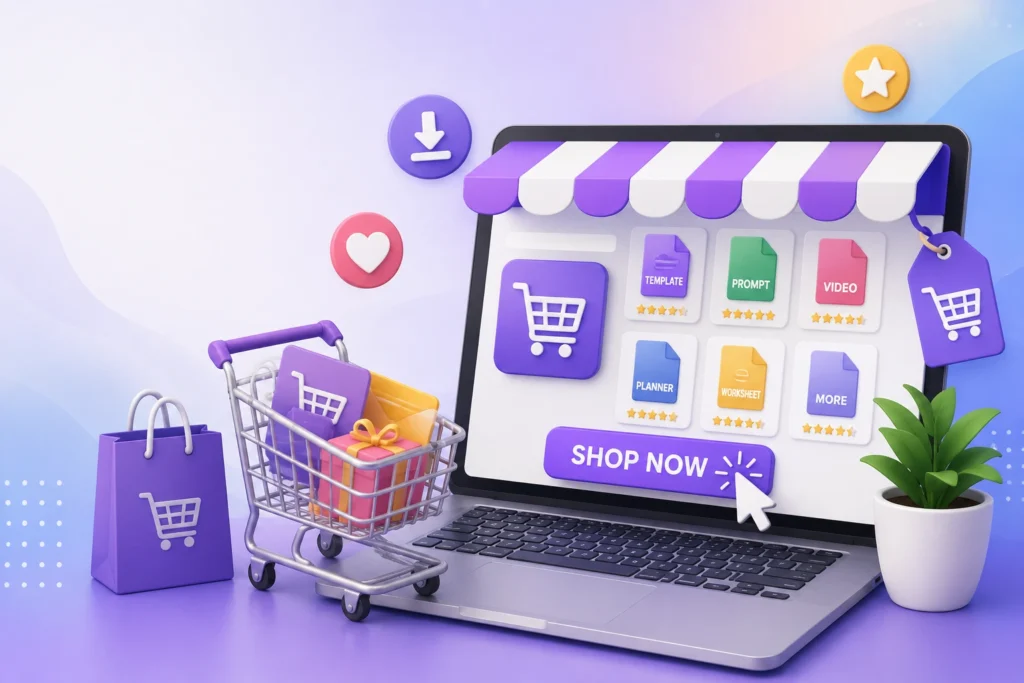
Free resources can be more than an occasional promotional tactic. When planned carefully, they can help businesses attract relevant visitors, demonstrate expertise, build trust, and introduce potential customers to useful products and services.
The most effective freebies for online business are closely connected to the audience’s needs and the business’s long-term goals. They provide genuine value without creating unrealistic expectations or hiding important usage conditions.
Start with one resource that solves a specific problem. Make it easy to access, connect it to relevant content, and provide a natural next step for people who want to explore further.
Then measure the results and use what you learn to improve your next resource.
You do not need a huge library of downloads to begin. A small collection of well-designed freebies can provide a useful foundation for building relationships with your audience and developing a more sustainable online business.